
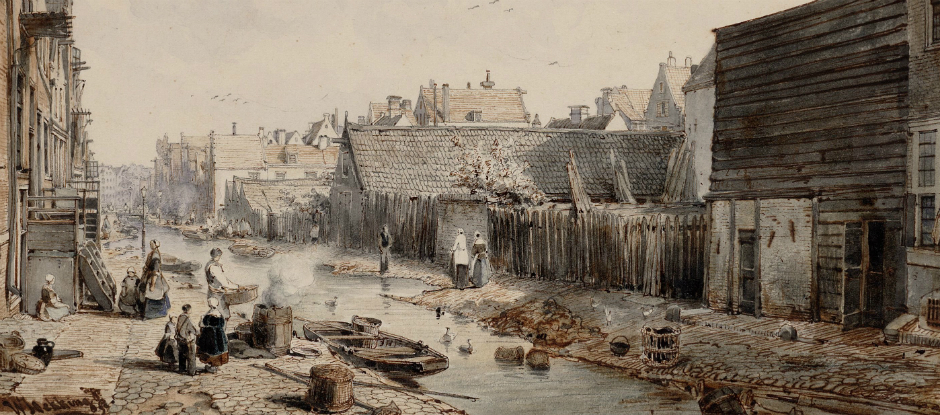
Studying the impact of urbanization on the respiratory health of past Dutch populations (ca. 470-1850 CE)
Duration: 2020-2025
Funding:  Dutch Research Council (NWO), project number: PGW.21.008
The impact that the physical environment has on our health is directly observable in the quality of the air we breathe. In the past few years, there has been growing concern about the possible effects of air pollution on the respiratory health of people living in newly industrialized centers: in 2016, respiratory disorders affected 12% of the Dutch population and caused the death of more than 5000 people.
We need clean air to breathe but, throughout history, achieving the balance between human endeavor and health has proved to be a challenge.
In the Netherlands, the urbanization of centres started around the 13th century and caused several medical concerns on the respiratory health of Dutch citizens. The intensification of industrial production and urban development brought severe impacts on Dutch air quality, whose consequences are still observable today on human skeletal remains in the form of small lesions within the nasal cavity and on the ribs.
With this study, a more complete understanding of the impact of urbanization and social changes over people’s respiratory health in the Netherlands will be developed, together with a new, more attentive and inclusive historical narrative of the Lowlands social past. Having an insight of how people responded to exposure to bad air quality in the past will help scholars to better comprehend respiratory conditions and to define future health policies, limiting a problem that is of increasing concern in today’s world.
 Maia Casna, PhD